
Commercial Cleaning
Commercial Cleaning vs Domestic Cleaning: What's the Difference?
By Stone & Key · Published · Last updated
Domestic cleaning looks after homes; commercial cleaning looks after workplaces and business premises. The core skills overlap, but the way the work is scoped, scheduled and managed is often different.
Neither is better than the other — they're designed for different settings. Here's how they compare.
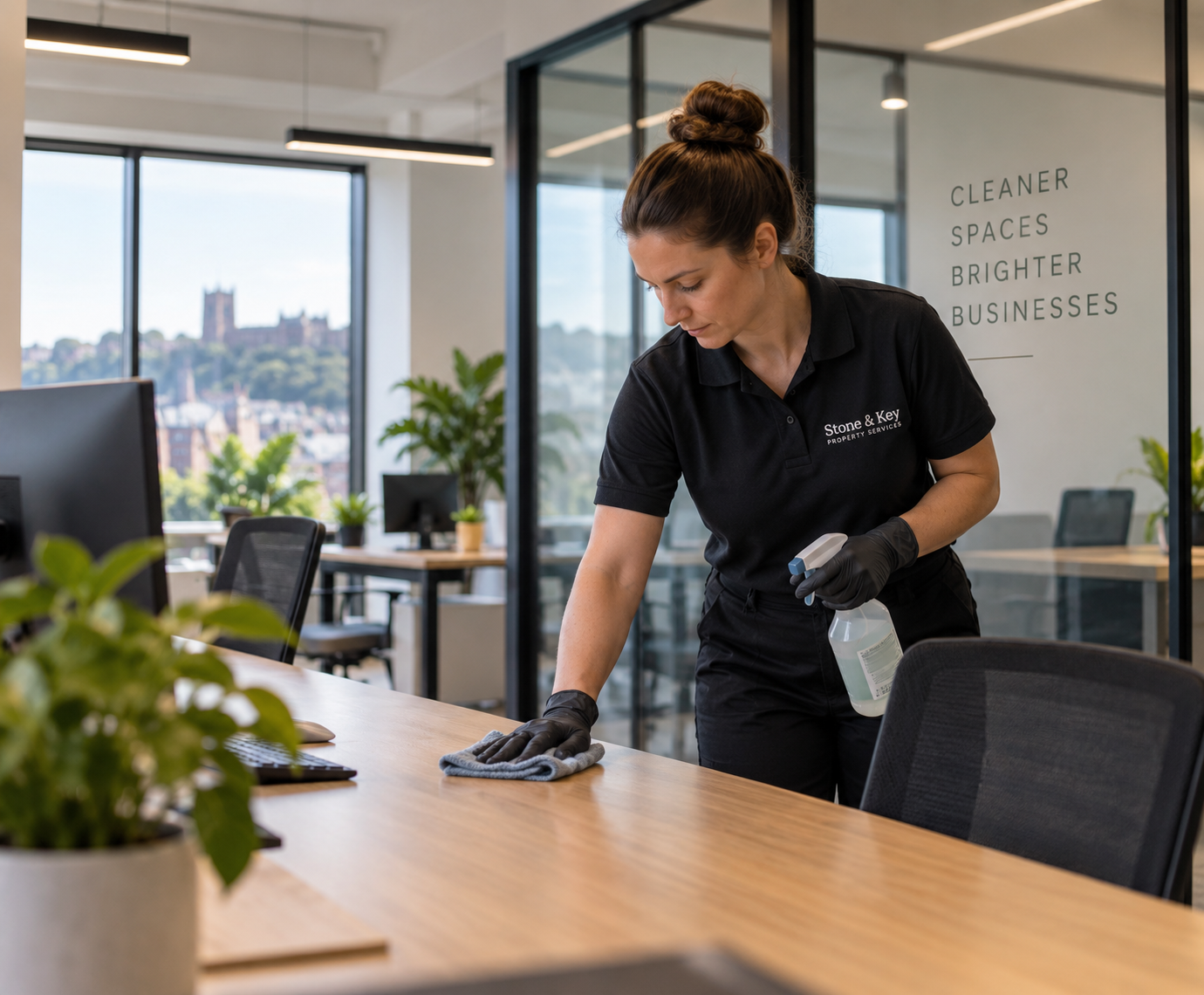
The short answer
Domestic cleaning is built around a household's routine and priorities. Commercial cleaning is built around a written specification, business opening hours and the needs of the people using the premises — staff, customers or visitors.
Property type and scale
Domestic cleaners work in houses and flats. Commercial cleaners work in offices, shops, clinics, studios, communal areas and other business premises, which can be much larger and have more shared facilities such as multiple washrooms and staff kitchens.
Frequency and scheduling
Domestic cleaning is usually weekly or fortnightly, during the day. Commercial cleaning is often more frequent — sometimes daily — and may happen early in the morning, in the evening or at weekends so it doesn't disrupt the working day. Out-of-hours work brings its own arrangements for keys, alarms and lone working.
Equipment and products
Domestic cleaners sometimes use the householder's products and vacuum. Commercial cleaning more often involves the provider supplying equipment suited to larger areas and different floor types, and may include restocking washroom consumables.
Specifications and accountability
Commercial cleaning is typically delivered against a written specification setting out each task and frequency. Businesses also tend to need consistency: cover when a cleaner is away, a way of reporting issues and some form of quality checking. Domestic arrangements are often more flexible and personal, which suits many households well.
One-off and recurring requirements
Both can be one-off or recurring. In homes, one-off work might be a deep clean or end of tenancy clean. In workplaces, it might be a clean after refurbishment, before an event or when moving in or out.
Comparison table
| Domestic cleaning | Commercial cleaning | |
|---|---|---|
| Property | Houses and flats | Offices, shops, clinics and other business premises |
| Scale | Usually smaller | Can be much larger, with shared facilities |
| Typical frequency | Weekly or fortnightly | Daily to weekly, depending on use |
| Timing | Usually daytime | Often early morning, evening or weekend |
| Scope | Agreed priorities, often flexible | Written specification |
| Products and equipment | Sometimes the householder's | Usually supplied by the provider |
| Cover and reporting | Varies | Usually expected |
Which do you need?
If you're cleaning a home, domestic cleaning is designed for you — see what a regular house cleaner does. If you're responsible for a workplace, commercial cleaning is usually more suitable because it's built around specifications, business hours and consistency. Our guide to choosing a commercial cleaning company explains what to look for, and our commercial cleaning page covers the premises we look after.
Frequently asked questions
Can a domestic cleaner clean a small office?
Sometimes, for a very small, simple office. As premises get larger or busier, a written specification, out-of-hours access, cover arrangements and appropriate insurance become more important, which is where commercial cleaning is usually a better fit.
Is commercial cleaning more expensive?
Not necessarily per hour. Pricing depends on the specification, hours, timing and what's supplied. Compare quotes on the same scope rather than on the label.
Related services
- Commercial cleaning
Cleaning for offices, shops, clinics and other business premises.
- Office cleaning
Regular and one-off cleaning for workplaces.
- Regular home cleaning
Weekly or fortnightly domestic cleaning.
Want an actual price for your property?
Market ranges only go so far. Tell us about your property and we'll come back with a quotation based on what you actually need — no obligation.
Related guides

Commercial Cleaning
How to Choose a Commercial Cleaning Company in Bristol
An impartial buyer's guide covering what to check, what to ask and the warning signs to look for when comparing commercial cleaning providers.
Updated 30 September 2026
Read guide
Commercial Cleaning
What Does Office Cleaning Include? A Guide for Bristol Businesses
The tasks a professional office clean usually covers, what tends to be extra, and how to agree a specification that fits your workplace.
Updated 30 September 2026
Read guide
Domestic Cleaning
What Does a Regular House Cleaner Actually Do?
The tasks a regular cleaner usually covers room by room, what normally needs agreeing separately, and what to discuss before the first visit.
Updated 30 September 2026
Read guide