
Commercial Cleaning
What Does Office Cleaning Include? A Guide for Bristol Businesses
By Stone & Key · Published · Last updated
Professional office cleaning usually covers the everyday work that keeps a workplace presentable and pleasant to use: desks and surfaces, floors, kitchens, washrooms, bins and the handles and switches everyone touches. Beyond that core, what's included depends on what you agree with your cleaner.
This guide sets out what a typical service covers, the tasks that are usually extra, and how to agree a specification so both sides know exactly what's expected.
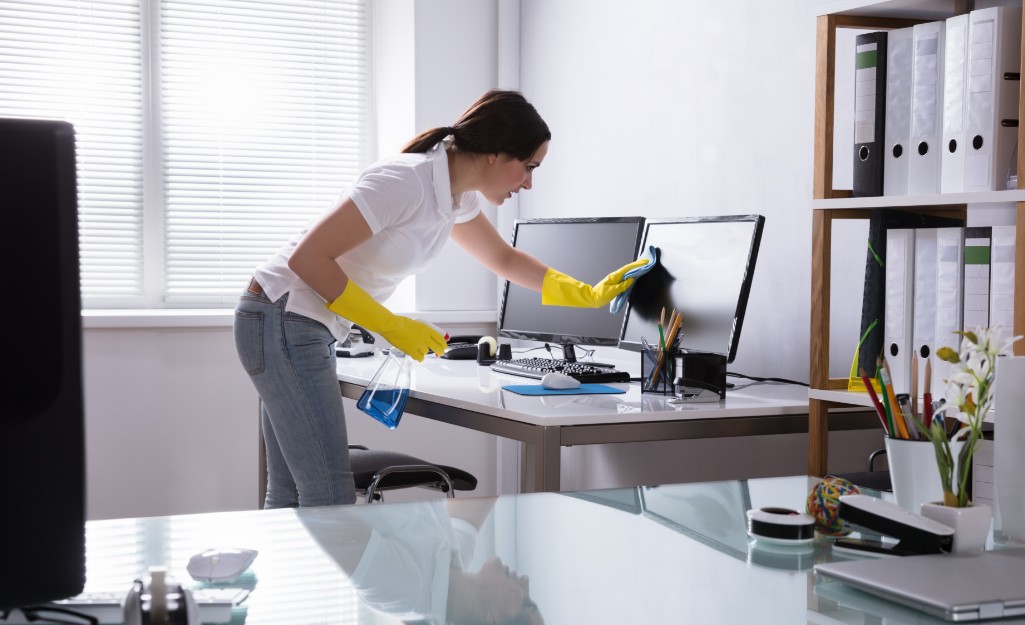
What office cleaning normally covers
Most regular office cleaning is maintenance: keeping surfaces, floors and shared facilities clean between visits. It isn't a deep clean every time. A good service is built around a written list of tasks and how often each is done — the specification — rather than a vague promise to "clean the office".
Desks and workspaces
- Wiping clear desk surfaces and dusting around equipment
- Dusting chairs, shelving, window sills and ledges within reach
- Emptying under-desk bins
- Spot-cleaning marks on glass partitions and doors
Cleaners generally won't move paperwork or personal items, so clear-desk habits make a noticeable difference. Screens, keyboards and phones are often left alone unless you ask for them to be cleaned.
Floors and carpets
Vacuuming carpeted areas and sweeping and mopping hard floors are standard. How often depends on footfall: entrances and corridors take far more wear than a quiet meeting room. Deep carpet cleaning is a separate, periodic job — see our carpet cleaning page.
Kitchens and breakout areas
- Cleaning worktops, sinks, taps and splashbacks
- Wiping cupboard fronts, appliance exteriors and tables
- Cleaning the microwave inside and out
- Loading or unloading the dishwasher, if agreed
- Mopping the floor and emptying bins
Cleaning inside the fridge is usually periodic and needs staff to clear old food first.
Washrooms
Washrooms normally get the most attention: toilets, urinals, basins, taps, mirrors, dispensers, partitions and floors. Employers have duties to keep workplace welfare facilities clean — the HSE's guidance on workplace facilities explains the basics. Whether your cleaner also restocks toilet roll, soap and paper towels, and who pays for them, should be agreed up front.
Bins and waste
Emptying bins, replacing liners and taking waste to your building's collection point are standard. Separating recycling, confidential waste and any specialist waste streams depends on your arrangements, so tell your cleaner how your building handles them.
Touchpoints and communal areas
Door handles, push plates, light switches, lift buttons, stair rails and shared equipment such as printers are touched constantly. Wiping them regularly is usually part of the service. Reception, corridors and stairwells are normally included where they're within your space.
Periodic and deeper tasks
Some tasks don't need doing every visit but shouldn't be forgotten. They're often scheduled weekly, monthly or quarterly:
- High-level dusting and vents
- Skirting boards, door frames and radiators
- Inside fridges and microwaves
- Descaling washroom fittings
- Internal glass and partitions
- Deep carpet or hard-floor cleaning
What may not be included as standard
- External window cleaning
- Deep carpet or upholstery cleaning
- Washing up beyond agreed tasks
- Supplying consumables
- Cleaning IT equipment
- After-event or post-refurbishment cleans
None of these is unusual to request — they just need to be agreed and priced.
How a cleaning specification should be agreed
The best starting point is a walk-round of the premises, either in person or with good information from you. A clear specification lists each area, the tasks in it, how often they're done and anything specific — access times, alarm codes, areas to avoid. Our office cleaning checklist is a useful template.
Different offices need different schedules. Twelve people in a small suite with one washroom have very different needs from a busy open-plan floor with a kitchen used all day. Our guide on how often an office should be cleaned goes into this.
Questions to ask before appointing a cleaner
- What exactly is included each visit, and what is periodic?
- Who supplies products, equipment and consumables?
- Who will be cleaning, and what happens when they're away?
- How are keys, alarms and access handled?
- How do we report a problem, and how quickly is it put right?
- What insurance is in place?
For an idea of how the specification affects price, see our office cleaning cost guide, or read more about our office cleaning service.
Frequently asked questions
Does office cleaning include cleaning computers and keyboards?
Often desk surfaces are cleaned but equipment is not touched unless agreed, because staff may leave work out and some equipment needs care. If you want screens, keyboards or phones wiped, put it in the specification.
Do office cleaners supply their own products?
Many commercial providers supply cleaning products and equipment, but it varies. Washroom consumables such as toilet roll and soap are a separate question — check who supplies and restocks them.
Is window cleaning part of office cleaning?
Internal glass and partitions are sometimes included; external windows are usually a separate specialist service.
Can office cleaning happen during working hours?
Yes. Daytime cleaning suits some offices, while others prefer early morning or evening. It depends on access, security and how disruptive the work would be.
Related services
- Office cleaning
Regular schedules and one-off cleans for Bristol workplaces.
- Commercial cleaning
Cleaning for shops, clinics, studios and other business premises.
- Carpet cleaning
Periodic deep carpet cleaning alongside a regular schedule.
Want an actual price for your property?
Market ranges only go so far. Tell us about your property and we'll come back with a quotation based on what you actually need — no obligation.
Related guides

Commercial Cleaning
How Often Should an Office Be Professionally Cleaned?
Why there's no single right frequency, the factors that decide it, and how to settle on a cleaning schedule that suits the way your office is used.
Updated 30 September 2026
Read guide
Commercial Cleaning
Office Cleaning Checklist: Daily, Weekly and Periodic Tasks
A room-by-room and task-by-task office cleaning checklist, plus how to turn it into a clear specification for a cleaning contractor.
Updated 30 September 2026
Read guide
Commercial Cleaning
Office Cleaning Costs in Bristol: 2026 Price Guide
What drives the cost of office cleaning, how hourly and contract pricing differ, and a planner to set out what your workplace needs.
Updated 29 September 2026
Read guide